The Triassic Period
Aquatic Carniferous Herbiferous Aerial
About:
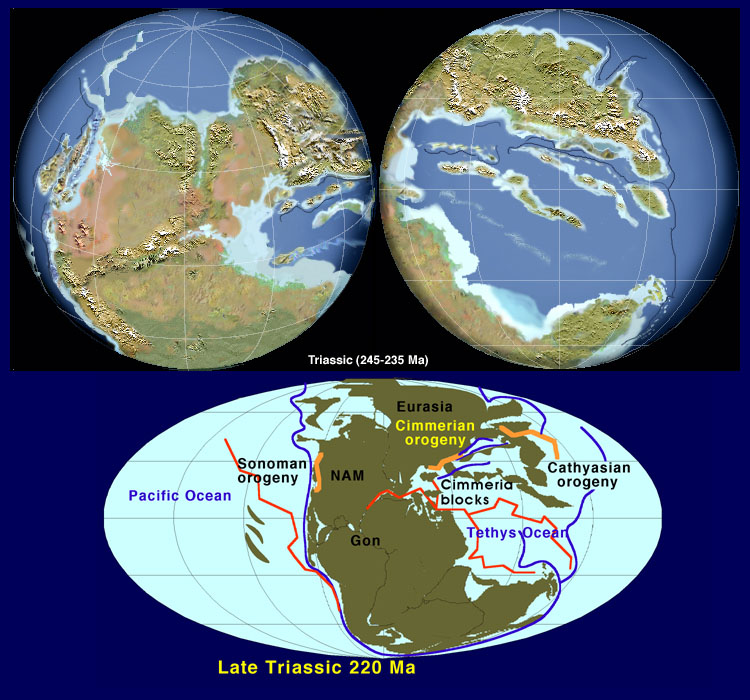
248 to 206 Million Years Ago. In many ways, the Triassic was a time of transition. It was at this time that the world-continent of Pangaea existed, altering global climate and ocean circulation. The Triassic also follows the largest extinction event in the history of life, and so is a time when the survivors of that event spread and recolonized.
Globe:
The Triassic resumes harsh desert scenes but with tropical forests, etc, being introduced, this period is marked between two massive extinction events.
Inhabitants:
This is the period of the Dinosaurs, some of the first dinosaurs took there first, and last steps through this time. This time introduces many interesting and unique species.
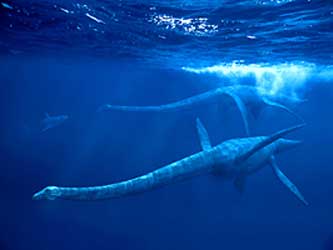 Plesiosaurus or 'Close Lizard' (translated from greek) were gigantic carniferous creatures resembling 'a snake threaded through the shell of a turtle', despite that they had no such shell. Although these creatures live along side Dinosaurs, they themselves are not dinosaurs.
Typical plesiosaurs had a broad body and a short tail. They retained their ancestral two pairs of limbs, which evolved into large flippers. Plesiosaurs evolved from earlier, similar forms such as pistosaurs or very early, longer-necked pliosaurs. There are a number of families of plesiosaurs, which retain the same general appearance and are distinguished by various specific details. These include the Plesiosauridae, unspecialised types which are limited to the Early Jurassic period; Cryptoclididae, (e.g. Cryptoclidus), with a medium-long neck and somewhat stocky build; Elasmosauridae, with very long, inflexible necks and tiny heads; and the Cimoliasauridae, a poorly known group of small Cretaceous forms. According to traditional classifications, all plesiosaurs have a small head and long neck but, in recent classifications, one short-necked and large-headed Cretaceous group, the Polycotylidae, are included under the Plesiosauroidea, rather than under the traditional Pliosauroidea. -Wikipedia
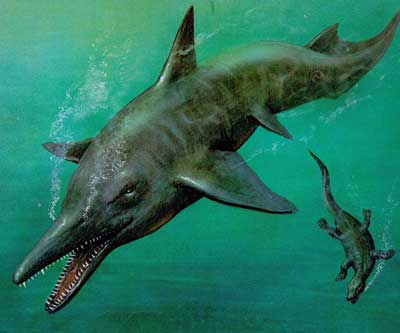 Mixosaurus A shark-like creature although named because of its strange body layout, mixed between that of an eel to that of a dolphin, another whierd fact is that it's front legs are longer than it's back legs.
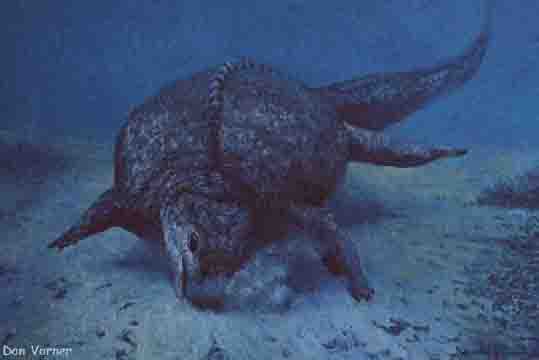 Placodont or 'table teeth' resembled some of today's large bottom-feeding mammals such as walruses or dugongs, others looking more turtle-like due to large bony plates on their backs. They had short limbs and were highly robust. They are also said to be related to Plesiosaurus. -Wikipedia, Edited.
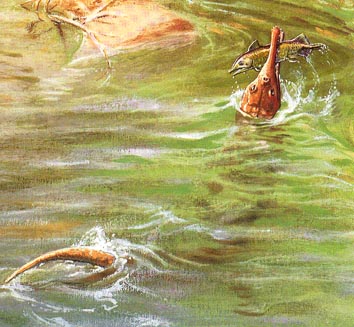 Rutiodon
Carniferous:
Aliwalia Rex
Swainwalkeria
Eoraptor
Plateosaurus
Coelphysis
Riojasaurus
Revueltosaurus
Kannemeyeria
Herrarasaurus
Coning Soon...